A pond on a balcony may be feasible, but the structure’s capacity must be checked before filling it. The weight of the water, the container’s supports, and the chosen location are just as important as its dimensions. A photo of the balcony or a general figure found online is not enough to confirm the project.
The right approach is to prepare a small dossier: water volume, equipment weight, dimensions, type of support, and a positioning plan. Once feasibility is confirmed, you can choose the plants and arrange a water garden suited to the exposure and your intended use.

Calculate what will actually be placed on the balcony
One litre of water weighs approximately one kilogram. This is a starting point, to which must be added the tank, baskets, substrate, stones, and equipment. The stated weight of an empty tub therefore only describes part of the future load.
Let’s take an example of preparation: 80 litres of water, an 8 kg container, and 12 kg of plants, supports, and accessories give approximately 100 kg in total. This calculation does not mean that a pond of this weight is permitted or suitable for your balcony. It is used to communicate the total load to the person who will check the structure.
Also account for other items present: furniture, planters, storage, and people. A project cannot be assessed by isolating the pond from the rest of the layout. Also plan for the maximum possible water level, especially in case of rain.
Why a figure in kg/m² is not enough
The balcony may be cantilevered, supported by a structure, or part of a loggia. Its age, condition, and design influence the assessment. A concentrated permanent load in one place is not simply a weight distributed evenly over its entire surface.
The bottom of the container and its support points are also important. A pond resting on a few feet does not transmit its load like a tank with a continuous base. The visible lining may itself rest on blocks or a secondary structure.
Do not deduce feasibility by simply dividing the weight by the total area of the balcony. Placing a board under the tub does not constitute approval either: its ability to distribute the load and the support’s constraints must be examined.
Who to ask for the check?
Gather the documents available from the owner, the building management company, or the manager: plans, structural characteristics, and any usage guidelines. Then present the project to a professional competent in structures, who can indicate the necessary information and checks.
Ask for an answer regarding the planned pond and its precise location. A vague statement like “the balcony is strong” does not provide the same elements as an assessment of volume, load, and supports. If the position or size changes, have it confirmed that the conclusion remains valid.
Also consult your lease and the building rules. An arrangement may raise questions about visible modifications, water drainage, noise, or common access. The procedures depend on the situation; have them specified before purchasing a set that is difficult to return.
Prepare a clear project sheet
| Information | What to provide |
|---|---|
| Container | Model, dimensions, empty weight, and type of support |
| Water | Useful volume and planned maximum level |
| Decoration | Weight of stones, baskets, substrates, and accessories |
| Position | Dimensioned plan with facade, railing, doors, and drains |
| Support | Type of slab, coating, or blocks, if known |
| Use | Plants, possible pump, maintenance, and presence of children |
A few photos complete the sheet, but do not replace the technical examination. If you observe cracks, concrete chips, traces of corrosion, or instability of the railing, report them to the manager before adding a load. Do not fill the pond to “test” the strength.
Think about drainage and waterproofing
The balcony must keep its water drains free and accessible. A tub installed in front of a drain may complicate cleaning or hide an obstruction. Water stagnation against a facade and infiltrations are among the defects described by the Agence Qualité Construction.
Plan how to manage overflow, a leak, and water changes. Water must not be poured onto the facade, the lower balcony, or passersby. Have the solution confirmed as compatible with the building; do not connect a pipe to a drain at random.
Maintain access to the underside or around the container depending on its design. Persistent moisture hidden under a large decoration can remain unnoticed for a long time. The materials placed between the tub and the ground must respect the manufacturer’s specifications and the needs of the support.
Choose a proportionate project after validation
Once feasibility is established, a small planted water garden is often the simplest project to arrange. Choose a container designed to retain water long-term and compatible with outdoor conditions. Check its frost resistance and how it behaves in the sun.
Avoid stacking stones and heavy accessories that serve no purpose for planting. They increase the load and reduce the free water volume. The basket supports must remain stable and suited to the tank.
Maintain comfortable circulation to the door and the balcony equipment. The container must not become a step near the railing. Access safety is planned with the complete arrangement, especially when children frequent the area.
What plants to consider?

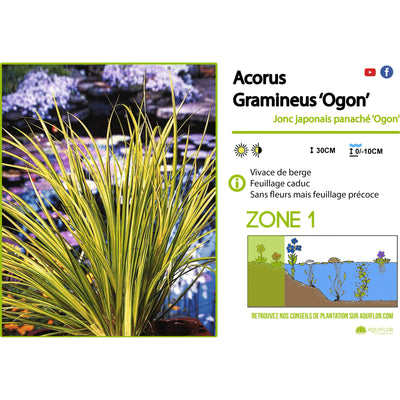
The Acorus gramineus ‘Ogon’ can provide low foliage in a suitable damp area. The marsh forget-me-not is another option for very shallow water. Each plant must be positioned according to its needs at the base.
Limit the number of plants to keep space. A plant in a small pot can become invasive in a small container. Accessible baskets make it easier to control growth and make adjustments without moving the entire pond.
Observe the actual exposure of the balcony. Wind, hot walls, and periods of shade can produce conditions different from those of a pond in a garden. A hardy species does not automatically benefit from the same protections in a small above-ground tub.
Should you add a fountain or fish?
A fountain adds an electrical circuit, noise, and a risk of splashing. If you choose one, select an effect very proportionate to the reserve and have the connections installed correctly. Test the operation without wetting the walkways or the neighbors.
Also read:
Fish require a separate assessment: swimming space, volume, water quality, temperature, filtration, and wintering. A planted balcony pond should not automatically receive a few goldfish. Koi are not suitable for a mini-container as a permanent habitat.
Without fish, you can already observe the plants and visiting insects. The RHS reminds that container water gardens can be used by flying insects, including in urban spaces. Their presence remains linked to the environment and is not guaranteed.
Organize maintenance before installation
Plan how to transport the water, remove a basket, and protect the container in winter. A full tub cannot be moved for a simple cleaning of the ground. Interventions must remain possible from a stable position, without leaning dangerously over the railing.
Also read:
Monitor the levels, leaks, the condition of the visible support, and the drains. Respect the container and equipment wintering instructions. If feasibility remains uncertain, keep the project at the planning stage and examine a lighter solution suited to the location with the professional.
Aquiflor can help you choose the plants and equipment after validation of the support. Send the authorized volume, dimensions, and exposure to support@aquiflor.com. The balcony’s capacity must be confirmed by the building professional competent for your structure.
For more information: Patio pond: arranging a small water garden on your terrace.
Sources and references
- Agence Qualité Construction: maintenance, permanent loads, and balcony defects. French technical document, without transposing a generic load to your building.
- Buildwise: technical references on building operational loads.
- RHS: container water gardens and visiting insects.
- Aquishop: needs of the ‘Ogon’ acor.