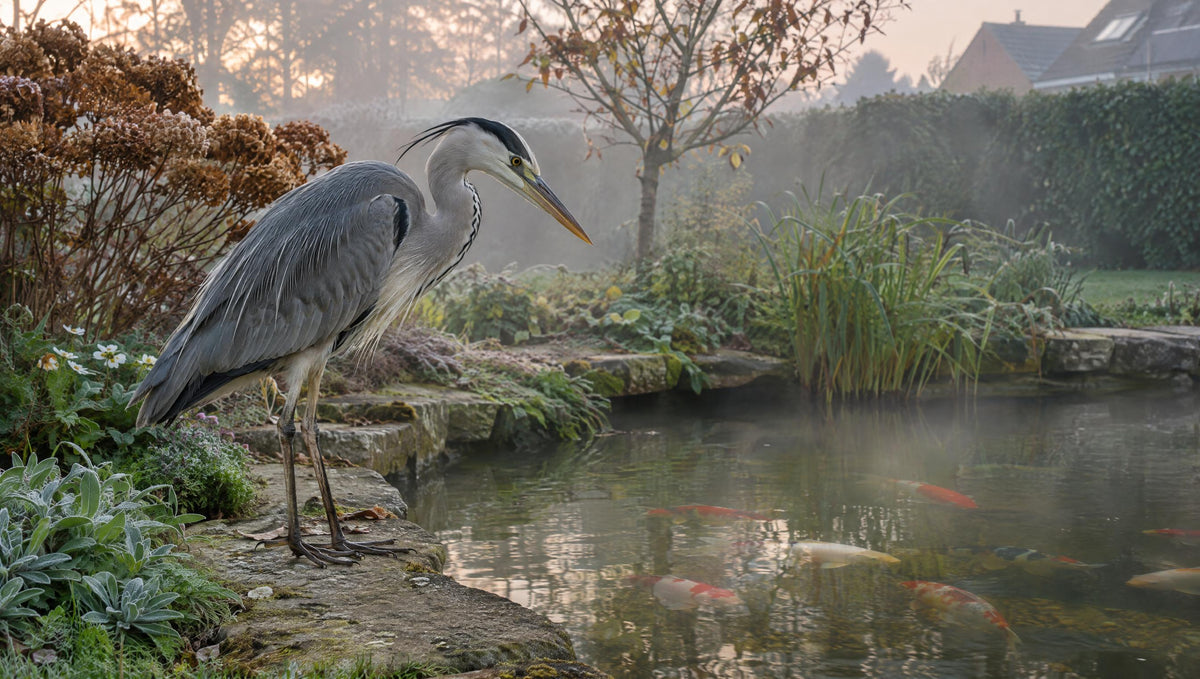
Some fish come up to look for food: nothing unusual about that. Several koi, however, remain at the surface, repeatedly opening their mouths and breathing with difficulty: this situation requires an immediate reaction.
Improve aeration with the available equipment, check the circulation, and test the water. If the distress is severe, if fish are losing their balance, or if the problem worsens, contact a veterinarian competent in fish care quickly. Lack of oxygen is a major lead, but it does not explain every case.

Distinguishing between a visit to the surface and respiratory distress
A fish accustomed to receiving floating pellets may come to wait for you. It then goes back to swimming normally. The movement is voluntary, brief, and associated with a routine activity.
Concerning respiration is persistent or unusual. Fish sometimes gather near the water inlet, stay with their mouths at the surface, or show rapid respiratory movements. Some become weak, isolate themselves, or lose their normal posture.
Also look at what happens when you move away. A group that continues to stay at the surface without food being provided deserves more attention. Do not feed them to check their appetite during an episode of distress.
What to do in the first few minutes?
- Strengthen air exchange. Switch on the appropriate aerator or check that it is outputting normally. If the installation allows it, use a water return that creates surface turbulence.
- Check the circuit. Look at the filter return, hoses, and pump intakes. An audible motor does not guarantee correct flow.
- Suspend feeding. Uneaten food adds unnecessary load to the water.
- Record the parameters and ask for help. Have the temperature, nitrites, ammonium/ammonia, pH, and recent history ready.
Do not wait for equipment to be delivered before acting. The equipment presented below helps with preparation and sizing the installation; an emergency requires using the appropriate means immediately available and seeking advice.
Handle electrical appliances according to their instructions, from a dry area, with the provided protections. A power failure should not lead to interfering in the water with a device that is still powered.
Why might there be a lack of oxygen?
Temperature plays a role: as water warms up, its capacity to hold oxygen at saturation decreases. This does not tell you its actual concentration, which also depends on exchange, photosynthesis, and consumption by organisms.
Fish breathe, but bacteria and decomposing waste also consume oxygen. A large population, an accumulation of organic matter, or algae die-offs can therefore increase demand.
A decorative waterfall is not automatically sufficient for every situation. Surface agitation, flow rate, pond configuration, and the needs of the population must be consistent. The mere sound of water does not measure the effectiveness of aeration.
Why does this sometimes happen in the early morning?
In the presence of light, plants and algae perform photosynthesis. At night, this input ceases while respiration continues. In some ponds, oxygen levels thus reach their lowest point toward the end of the night.
A pond that appears to have no problems in the late afternoon may therefore present a difficulty a few hours later. Warm nights, a large biomass, and a period unfavorable to photosynthesis increase the risk.
Note the time of the episodes. An oxygen measurement taken only when everything is fine may miss the difficulty. Monitoring must correspond to the moment when the fish show signs, using a suitable device or test.
Can a pump or filter be responsible?
A clogged pump intake, a pinched hose, insufficient water level, or a loaded filter can reduce circulation. Compare the visible flow to what you usually observe. Check if a bypass has been opened or if a valve has changed position.
If the circuit has stopped, search for the cause before considering a restart as a complete solution. A filter that has been without circulation for a long time requires an assessment of its condition and a proper restart; avoid sending suspicious stagnant water into the pond.
Do not clean the entire system with large amounts of chlorinated water at once. Biological filtration needs active microorganisms. An overly drastic intervention can add a nitrogen treatment problem after the initial incident.
Test for nitrites, even when the water is clear
Nitrites can disrupt oxygen transport in the body. Fish may then show respiratory difficulties despite visible aeration. This is an essential reason not to jump too quickly to the conclusion of a simple bubble shortage.
Also check ammonium/ammonia, pH, and temperature. After topping up or changing water, specify the source of the water and the preparation carried out. Chlorine and chloramines are other elements to consider depending on the context.
The JBL ProAquaTest CombiSet Pond case allows for several of these checks, notably nitrites and ammonium. It does not replace a dissolved oxygen measurement and does not include all possible tests.
Communicate the values, their units, and the time of measurement. Avoid adding salt or a pH corrector based on a recipe found quickly: intervention depends on the results, the species, and all parameters combined.
When should a gill problem be considered?
Gills that are irritated or affected by a disease can make breathing difficult. Several causes produce similar signs. The presence of only one affected fish, or the persistence of signs after correcting water conditions, justifies further investigation.
Observe the respiratory movements, fins, and any lesions without unnecessarily catching the fish. A video and water results are useful to the vet. Examination of the gills and any necessary sampling must be performed appropriately.
Improvement after aeration is useful information, but it does not prove that any other cause is excluded. Continue monitoring and look for what triggered the episode.
Choosing suitable aeration to prevent recurrence
The OASE AquaOxy 1000 provides a maximum stated air output of 1,000 liters per hour and has two outlets with diffusers. The product sheet indicates a capacity of up to 10 m³, which must be balanced against the stocking levels and actual conditions.

The stated air output is not the amount of oxygen actually dissolved in the pond. Depth, diffusers, hoses, and their maintenance influence performance. Follow the manufacturer's assembly instructions and regularly check air production.
In a deep pond with different water layers, sudden agitation of the bottom can be problematic. Do not randomly modify all circulation during an emergency and do not stir up old sludge that is poor in oxygen.
Reducing organic load after stabilization
Once the fish are stabilized and the cause examined, correct lasting factors: excess food, plant waste, potential overpopulation, and insufficient maintenance. Plan the removal of deposits gradually, taking the population into account.
A PondoVac 4 vacuum can help remove accessible matter. Aquipond Bactovase bacteria can be part of maintaining the organic fraction, according to their instructions. They do not constitute an oxygen supply or an immediate response to respiratory distress.
Preparing the pond before the next hot spell
Check aeration capacity, filtration flow, and measurement equipment. Keep a log of parameters and plan the procedure in case of a breakdown.
Sources
- Merck Veterinary Manual — Environmental Diseases of Aquatic Animals: hypoxia, nitrites, irritants, and water quality.
- University of Georgia Extension — Oxygen Depletion in Ponds: day/night variations and oxygen consumption.
- OATA — How to Look After Pond Fish: maintenance, water, and signs of distress.
- RSPCA — Fish Health: abnormal respiratory behavior and veterinary advice.
- Aquishop product sheets: characteristics and stated uses.