The short answer: filamentous algae are highly cold-resistant: they grow more slowly in winter but do not disappear, and they recover very quickly with the first rays of sunshine in February-March. In winter, mechanically remove what you can on mild days, remove dead leaves that feed the water, and prepare your spring plan: a mineral conditioner like Aquipond Greenstab as soon as you restart, bacteria to consume nutrients, and plants to compete with them.
Key points
- Filamentous algae tolerate cold water: they start before plants in spring.
- Their fuel: nitrates and phosphates from leaves, sludge, and food.
- In winter: remove by hand or with a net, remove dead leaves, no unnecessary feeding.
- In spring: Greenstab, bacteria, plants, and early filtration restart.
- No algaecide in cold water: fish are fragile and dead algae pollute the water.
Why are there still filamentous algae in winter?
We often imagine that the cold cleans the pond. For suspended green algae, those that make the water green, it is partly true: they slow down significantly. But filamentous algae are attached algae, in long threads, that cling to stones, walls, and plants. Many of them are adapted to cool waters: they slow down in the middle of winter, but do not die. As soon as the light returns in February-March, while the water is still cold, they start before the pond plants, which wait for warmer water to wake up.
This is why so many owners see filamentous algae "explode" in spring: they have the whole pond to themselves for a few weeks, with water loaded with nutrients accumulated during autumn and winter.
Where do the nutrients that feed the filaments come from?
- Dead leaves fallen in autumn, which decompose at the bottom.
- Sludge accumulated over the seasons.
- Food given in excess or in cold weather, which the fish no longer digest.
- Runoff water from the garden, loaded with fertilizers.
- Tap water used for top-ups, sometimes rich in phosphates.
Every gram of nutrient you remove this winter is a gram that will not feed the filaments in spring.
What to do in the pond during winter?
- Remove the filaments by hand or with a professional net, on a mild and dry day. Wrap them around a stick like cotton candy: they come in long strands.
- Remove dead leaves that remain on the surface and accessible bottom.
- Do not feed the fish when the water is cold: undigested food becomes nutrients.
- Do not stir up the sludge in the middle of winter: you would disturb the resting fish. Save the major cleaning for the end of winter.
- Keep oxygen and an opening in the ice: a well-oxygenated pond degrades its waste better.
Do not do in winter: a chemical anti-algae treatment in cold water. The fish are slowed down and more fragile, and algae that die en masse decompose at the bottom, consume oxygen and release their nutrients. You would prepare exactly the spring you want to avoid.
The spring plan against filamentous algae
1. A mineral conditioner as soon as you restart
Aquipond Greenstab is an entirely organic product, without algaecide, which enriches the water with minerals and often makes anti-algae treatments unnecessary. According to its sheet, it is independent of water temperature: you can therefore use it from the end of winter, before the filaments start. The indicated dosage is 25 g per 1,000 liters, twice a month during the first use. It is our main solution against filamentous algae.
2. Bacteria that consume nutrients
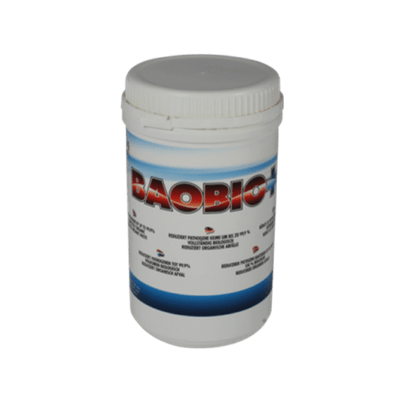
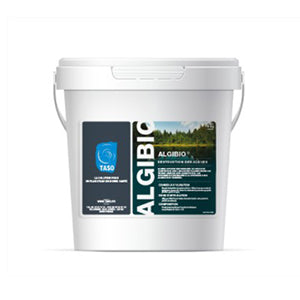
As soon as the water exceeds ten degrees, the bacteria get back to work. For a fish pond, BaoBio+ reduces organic waste (2.5 g per 1,000 liters each week according to its sheet). For a natural pond with recurring filaments, Aquipond Algibio provides bacteria that consume nitrates and phosphates: a 5 kg bag treats 1,000 m². The Biobooster+ from Aquatic Science targets sludge and filaments.
3. Plants that compete
Plants are the best enemies of algae: they consume the same nutrients. Add oxygenating submerged plants, bank plants, and floating leaf plants that shade one-third to half of the surface. The floating planting baskets allow you to plant even in a pond without a bank.


4. Filtration restarted early
If you stopped your filter for winter, restart it as soon as the water rises, with starter bacteria. Change the bulb of your UV-C: after one season, it still shines but its efficiency against algae has greatly decreased. We explain it in our article on the UV lamp before spring. UV acts on suspended algae, not on attached filaments: it complements the plan, it does not replace it.
The workshop's advice: mark the first week of February in your calendar. It is the right time to order your Greenstab, your bacteria, and your UV bulb, so you are ready to treat from the first beautiful week. The customers who start early are those who see almost no filaments.
Frequently asked questions
Do filamentous algae die in winter?
No, most only slow down. They start again as soon as the light returns, often before the pond plants.
Can filamentous algae be treated in winter?
Remove them mechanically on mild days. Avoid algaecides in cold water. A mineral conditioner like Greenstab, independent of temperature according to its sheet, can be used from the end of winter.
When to start treating against filamentous algae?
Before they start: in February-March, as soon as the pond is restarted.
Is UV-C enough against filamentous algae?
No. UV-C acts on suspended algae. Filamentous algae are attached: you must limit nutrients, add plants, and use a conditioner like Greenstab.
Written by the Aquiflor team, a store specializing in ponds and ponds in Nodebais (Belgium), official Oase repair workshop. Updated in November 2026. Doses: Greenstab, BaoBio+ and Algibio product sheets.
Do your filamentous algae come back every year? Send us a photo and the volume of your pond to support@aquiflor.com: we will prepare a custom spring plan for you. See all our solutions against algae.