The short answer: water temperature decides everything. Koi are cold-blooded fish: their digestion slows down when the water cools. Above 18°C, feed several small meals a day of growth food. Between 12 and 18°C, fewer meals and more digestible food. Below 12°C, wheat germ food, once a day at most. Around 6 to 7°C, when the fish no longer ask for food, stop. At each meal, only give what is eaten in a few minutes.
Key points
- Measure the water temperature, not the air temperature.
- Above 18°C: 2 to 4 small meals a day.
- Below 12°C: wheat germ, one ration a day at most.
- Around 6 to 7°C: stop feeding.
- Each meal: what the koi eat in a few minutes, no more.
Why does temperature change the way you feed?
A koi does not regulate its internal temperature: its body is at the temperature of the water. When the water is warm, its metabolism runs fast, it digests quickly and can convert a lot of food into growth. When the water cools, everything slows down: the food stays longer in the intestine, and food that is too rich can be poorly digested. The filter follows the same rhythm: the bacteria that transform waste work more slowly in cold water. Overfeeding in autumn therefore tires the fish and overloads a filter that is running slowly.
This is why manufacturers offer different ranges: a basic food for the season, a color or growth food for summer, and a wheat germ food, more digestible, for spring and autumn.

What to give above 18°C?
It is the full season: koi are active, eat willingly and grow. The basic food remains the pillar, for example Hikari Staple, a very digestible floating granule intended for water above 12°C. To enhance the red, Hikari recommends adding Hikari Gold to about 30% of the ration: with 100% Gold, the red risks bleeding into the white areas. A Belgian alternative is Malamix Food, developed by a veterinarian, with spirulina, astaxanthin and vitamin C for colors, and aloe vera and inulin for natural defenses.
The rhythm counts as much as the quantity. Hikari indicates 2 to 4 meals a day between 18 and 30°C, each dose having to be consumed within 5 minutes. Several small meals are better assimilated than one large one, and the food does not linger in the water.
What to give between 12 and 18°C?
It is the transition period, in spring as in autumn. The fish still eat, but digest more slowly. We reduce the number of meals to one or two a day and gradually mix the basic food with a wheat germ food. In autumn, we gradually switch to wheat germ; in spring, we do the opposite. Aquifood Wheat-Germ is intended for water below 15°C: its plant proteins from wheat germ are easy to digest.
What to give below 12°C?
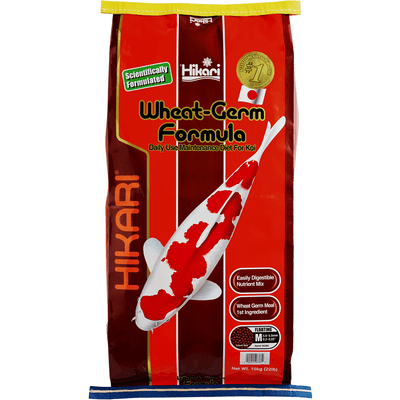
Below 12°C, the metabolism slows down significantly. We no longer give anything but wheat germ food, such as Hikari Wheat-Germ, developed for the coldest months and temperature changes. Hikari indicates at most two meals a day between 5 and 18°C, consumed in 5 minutes; Malamix recommends a single ration a day below 12°C. In practice, the lower the water gets, the more we space out: every other day, then only a few granules on warmer days.
Around 6 to 7°C, the koi no longer ask for food: that is the signal to stop. They then draw on the reserves accumulated during the warm season. Do not worry if they remain motionless at the bottom: that is their normal behavior in winter.
| Water | Food | Meals |
|---|---|---|
| Above 18°C | Base (Staple, Malamix Food) + color (Gold at 30%) | 2 to 4 per day |
| 12 to 18°C | Base mixed with wheat germ | 1 to 2 per day |
| 7 to 12°C | Wheat germ only | 1 per day at most, then spaced out |
| Below 6-7°C | Nothing | Stop |
Guidelines from the Hikari, Aquifood and Malamix recommendations found on the product sheets.


What quantity to give at each meal?
The most reliable rule is to observe: give a small handful, watch, and only add more if everything disappears quickly. Manufacturers give a window of a few minutes: 5 minutes for Hikari. Malamix expresses it differently: above 12°C, the daily quantity represents 2 to 4 times what your koi eat in 10 minutes, spread over several meals. Any granule that remains after the time should be removed with a net: it decomposes and feeds the algae.
Also choose the right granule size: a Medium for medium koi, a Large for big ones. A granule that is too big is not swallowed by small fish, a granule that is too small forces big ones to swallow a lot. Prefer a format that you will empty in one season: food that has been open for too long loses its freshness.
The workshop's advice: always feed in the same place and at the same time. Koi get used to coming, which allows you to observe them every day: swimming, appetite, fins, skin. A fish that no longer comes to eat is often the first sign of a problem.

And during the holidays?
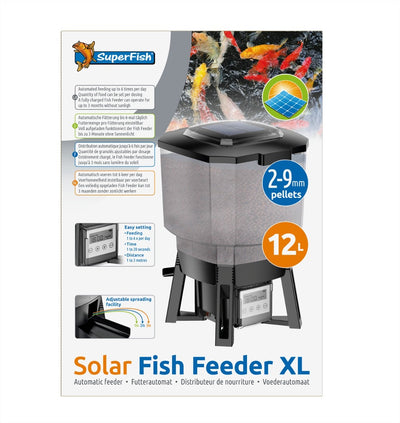
One week without food in summer does not pose a problem for healthy adult koi, in a well-balanced pond: it is better to have a light fast than a neighbor who pours half a bag at once. For longer absences or very populated ponds, an automatic feeder solves the problem. The Superfish Solar Fish Feeder XL works on solar energy, contains 12 liters of food, distributes up to 6 meals a day and accepts granules from 2 to 9 mm. Test it a few days before leaving: measure the quantity actually distributed with your food and check if there are any granules left. A feeder applies the settings given to it, without seeing a drop in appetite or a stopped filter: adapt its programming to each season, and ask someone to keep an eye on the pond and the equipment during your absence.
Beware of false warmth: a few days of warmth in winter warms the air much more than the water. Rely on the thermometer plunged into the pond, not the weather. Resume feeding in spring only when the water temperature rises sustainably, starting with small quantities of wheat germ.
And during a heatwave?
Heat is not a reason to feed more. Warm water contains less oxygen, while the fish, the filter bacteria and the sludge consume more. If your koi come to breathe at the surface or gather near the waterfall, do not feed them during the episode: digestion further increases their need for oxygen. Boost aeration with an air pump or by running the waterfall, and do a water test to find the cause.
Even without signs of alert, reduce rations if the koi eat less, and do not follow the summer rhythm out of habit. During very hot days, a light meal at the coolest time of the day is better than several meals in the middle of the heat.
Errors to avoid
- Feeding according to the air temperature instead of the water temperature.
- Keeping the growth food in autumn: it is too rich for cold water.
- Giving one big meal a day instead of several small ones in summer.
- Leaving granules floating after the meal.
- Giving 100% color food: the red can bleed into the white.
- Resuming too strongly in spring, when the filter is barely restarting.
- Feeding koi that are looking for air during a heatwave.
Frequently asked questions
At what temperature should you stop feeding koi?
Around 6 to 7°C, when the koi no longer ask for food. Between 7 and 12°C, we only give wheat germ food, once a day at most.
How many times a day should you feed your koi in summer?
Hikari indicates 2 to 4 meals a day between 18 and 30°C, each dose being consumed within 5 minutes.
When to switch to wheat germ?
When the water drops below 15°C approximately, by gradually mixing it with the basic food, then only wheat germ below 12°C.
Can you give only color food?
Hikari recommends mixing about 30% Gold with the basic food: at 100%, the red risks bleeding into the white areas.
Should you feed koi during a heatwave?
Less, and not at all if the koi come to breathe at the surface: warm water contains less oxygen, and digestion demands more. Aerate first.
Written by the Aquiflor team, a store specializing in ponds and ponds in Nodebais (Belgium), official Oase repair workshop. Updated in November 2026. Rations and temperatures: recommendations from manufacturers Hikari, Aquifood and Malamix.
A question about the feeding of your koi? Write to us at support@aquiflor.com, call 010 86 03 54 or visit the store in Nodebais.