In short: first choose a quality staple food for the whole season, then a wheat germ food for spring and autumn. The pellet size depends on the size of the fish, not the bag. And the quantity always depends on the water temperature. This guide compares Aquifood, Hikari Friend, Saki-Hikari, and Hikari Wheat-Germ, and gives you a simple calendar for feeding your koi without damaging the water quality.
Why food matters so much for koi
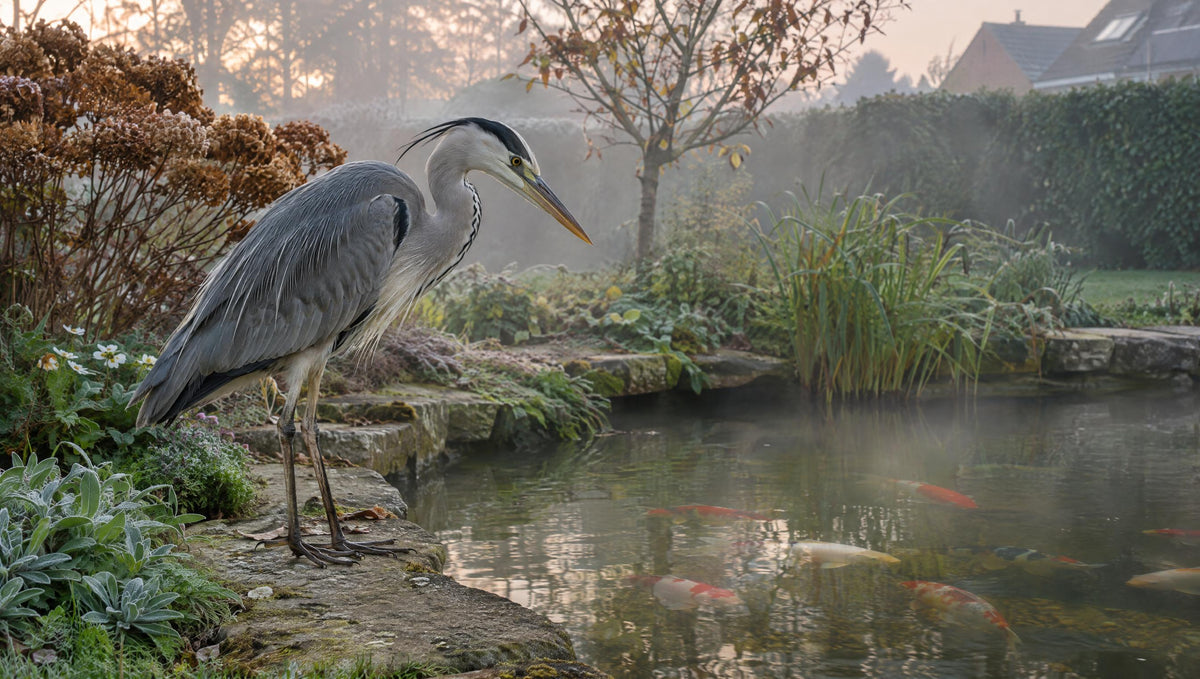
Koi are carp: they have no stomach and digest continuously, at a rate that depends directly on the water temperature. What they eat quickly shows up in their growth, their colors, their resistance to diseases… and in the pond water. Food that is difficult to digest produces more waste, therefore more ammonia for the filter and more nutrients for algae. Choosing the right food is therefore also protecting the water quality.

The three families of food
| Use | When | Examples |
|---|---|---|
| Staple food | Water above about 15 °C | Aquifood Color & Growth, Hikari Friend |
| Premium growth food | Full season, quality koi | Saki-Hikari Balance |
| Wheat germ, easy to digest | Spring and autumn, cool water | Hikari Wheat-Germ |
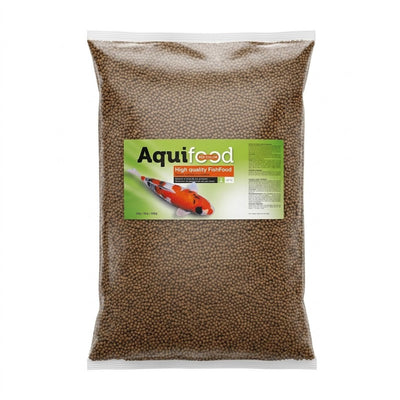
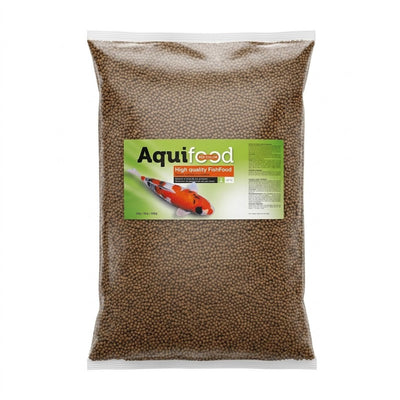
Aquifood Color & Growth: our all-season food
It is the house food, the one our customers buy back the most. It comes in 2-3 mm pellets for young koi, 4-5 mm for most ponds, and 6-7 mm for large koi. The 10 kg bag is the most economical; the 4 kg is suitable for small ponds, because an open food keeps better if it is consumed in one season.

Aquifood Color & Growth
The staple food

Saki-Hikari Balance
Quality koi

Hikari Wheat-Germ
Spring and autumn
Hikari Friend: the good Japanese value for money
Hikari Friend Medium is a complete staple food, with stabilized vitamin C, easy to digest and that does not cloud the water. It feeds the whole pond, koi and other fish, which makes it a practical choice for mixed ponds. Also available in Large for adult fish.
Saki-Hikari Balance: for quality koi
Saki-Hikari Balance aims for sustained growth without fat deposits, good proportions and a beautiful shine. It contains the Hikari Germ probiotic, which helps digestion and reduces waste. It is the food of enthusiasts who want to see their koi grow harmoniously. It requires well-filtered and aerated water to give the best of itself.

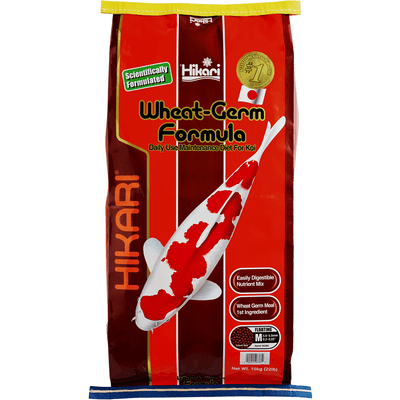
Hikari Wheat-Germ: for cool seasons
Based on wheat germ, it remains very digestible in water that is cooling down or that varies. It is given at the end of the season, when the water drops below 15 °C, then at the start of spring. It prepares the koi for winter without overloading their digestive system, which slows down with the cold. See Hikari Wheat-Germ Medium.
What pellet size to choose?
The rule is simple: the pellet must easily fit into the mouth of the smallest fish you want to feed. For koi under 15 cm, take 2-3 mm. From 15 to 40 cm, 4-5 mm is suitable for almost all ponds. Beyond that, 6-7 mm limits waste, because large koi swallow large pellets more efficiently. In a mixed pond, prefer the medium size, or mix two sizes.
How much and when to feed?
- Give what the koi eat in 3 to 5 minutes, and remove the surplus.
- In full season: several small meals are better than one big one.
- Below about 10 °C: switch to wheat germ and reduce. Below 5-6 °C: stop feeding.
- To not overload the water during your absences, an automatic feeder distributes the rations.
Attention: overfeeding is the first cause of cloudy water and ammonia spikes. Koi that "beg" are not necessarily hungry: it is a learned behavior.
Properly storing the food
Vitamins, and especially vitamin C, degrade with heat, light, and humidity. Close the bag well, keep it cool and dry, never in the sun in the garden shed, and buy a format that you will consume in one season. Food opened for more than a year has lost part of its nutritional value, even if it looks intact.
The workshop advice: the best food does not make beautiful fish in unbalanced water. Keep a stable GH and KH, and think about clay, which brings minerals and supports colors: our BactoClay + Hikari Friend pack brings the two together.
Frequently asked questions
Can you mix two foods?
Yes, it is even common: a staple food daily, and a premium food a few times a week. Change gradually, over a week, to accustom the digestion.
Can koi eat bread?
Avoid it. Bread swells, digests poorly and pollutes the water. A few finely cut fruits or vegetables, like watermelon or lettuce, remain occasional treats.
Why are my koi no longer eating?
First check the temperature and the water quality (ammonia, nitrites, pH). A fish that refuses its food in full season is often a fish stressed by the water.
The calendar of the year
- March-April: the water rises above 8 to 10 °C. Start slowly again with Hikari Wheat-Germ, once a day, in small quantities.
- May: above 15 °C, gradually switch to the staple food, mixing the two for a week.
- June to August: full season. Staple food or premium, two to four small meals a day. During heatwaves, reduce and reinforce aeration.
- September-October: when the water drops below 15 °C, return to wheat germ and space out the meals.
- November to February: below 5-6 °C, we no longer feed. The koi live on their reserves and stay calm at the bottom.
The mistakes that cost dearly
- Feeding by the air thermometer rather than the water one: a beautiful day in March does not yet warm the bottom of the pond.
- Changing food all at once: the digestion of koi needs a few days to adapt.
- Buying a large bag for a small pond: the open food loses its vitamins before being finished.
- Feeding right after a treatment or a big water change: leave 24 hours for the pond to stabilize.
A pond thermometer fixed at mid-depth remains the best investment to feed well: it tells you exactly what food to give, and in what quantity, at each period of the year.
Reading a koi food label
Three pieces of information make the difference. The proteins: a growth food contains more than a maintenance or cool season food. More proteins also means more nitrogenous waste: these foods require a filter up to the task. The fats: they bring energy, but an excess favors fat deposits and weighs down the silhouette. The useful additives: stabilized vitamin C for immunity, probiotics for digestion, natural pigments like spirulina or astaxanthin for the shine of the reds. Beware of very cheap foods whose list starts with plant flours: they fill the stomach without really feeding, and end up as sludge at the bottom of the pond.
Feeding by hand: the best observation time
The meal is the ideal opportunity to count your fish and check their condition. A koi that stays away, that rubs its sides against the walls or that presents folded fins deserves that we check the water. Take the habit of always feeding in the same place and at the same time: koi get used to it quickly and even come to eat in the hand, which greatly facilitates checks and care.
You do not know what pellet size to take? Tell us the size of your koi and the volume of the pond at support@aquiflor.com.