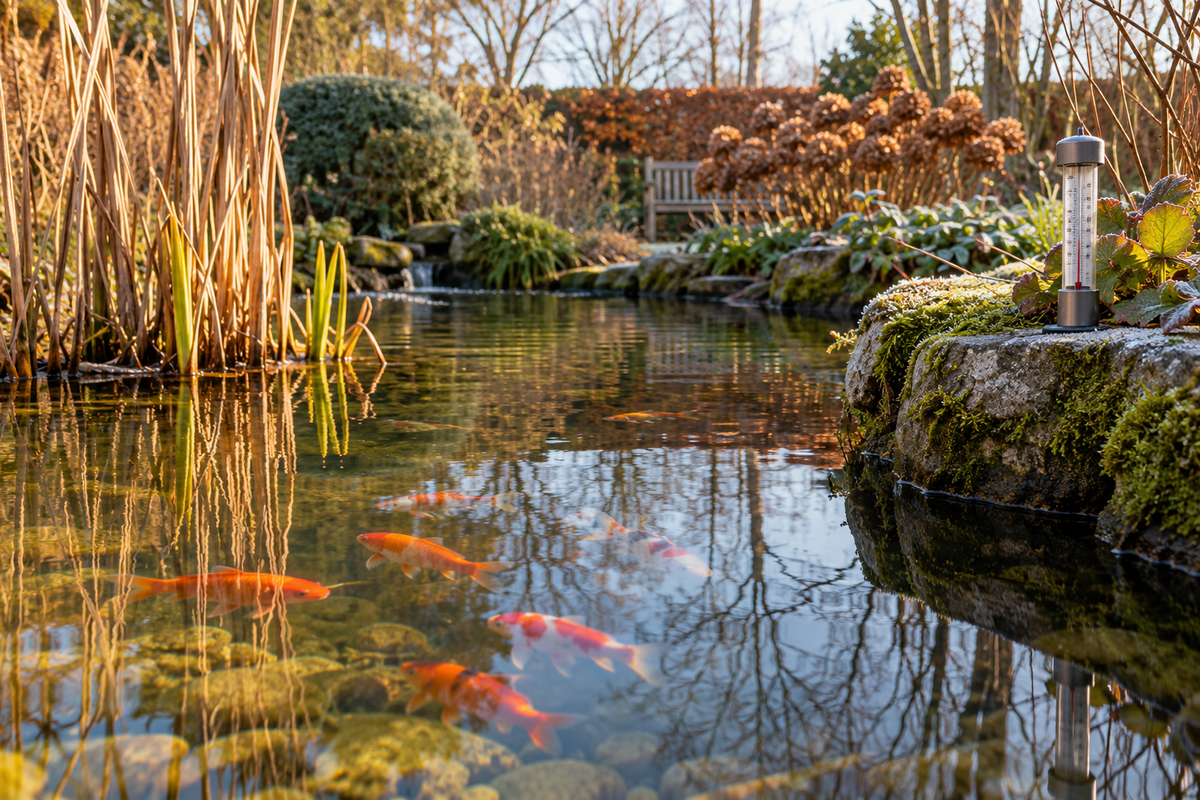
The Tamasaba intrigues from the very first glance: a well-rounded body, a pronounced dorsal fin and a single tail that accompanies a lively swim. This Japanese fish has a look all its own. It belongs to the goldfish family, and its arrival requires more than a pretty container filled with water.
Are you looking for a Tamasaba and want to prepare for its arrival? Here are the points to know to recognize it, discuss its origin and plan a suitable aquarium or pond. For a search at Aquiflor, start by confirming arrivals and ordering options.

A Japanese goldfish associated with Niigata
The Tamasaba is a variety of goldfish, Carassius auratus, developed in the Japanese region of Niigata. The farms in this region associate it with an aquaculture tradition also known for koi carp. However, its commercial name does not refer to a miniature carp.
Also read:
- Sarasa: characteristics and needs of this two-colored goldfish
- Fin rot in goldfish: recognize the signs and react
Breeders describe a fish with a high and rounded body, with a single tail. The red and white coat is common, but the patterns and shapes vary depending on the individuals and lineages. Some fish have a longer tail than others. A profile photograph and a short swimming video are therefore particularly useful for comparing offers.
Variety and lineage names can also overlap in trade. If a precise designation is important to you, ask for the breeder's name or the known origin. A serious identification relies on several elements, not just the red and white color.
Tamasaba, Ryukin and Sarasa: visual cues
The Tamasaba resembles the Ryukin with its compact and high body. The tail is a major cue: the Tamasaba's is single, while the Ryukin has a double tail. Sarasa mainly describes a red and white coloration; common or comet-type pond Sarasas generally have a more elongated silhouette.
| Name encountered | What to observe |
|---|---|
| Tamasaba | Rounded body, pronounced height and single tail; variations depending on the lineage. |
| Ryukin | High and compact body with a double tail. |
| Comet-type Sarasa | Red and white coloration, slender body and elongated single tail. |
| Koi carp | Different species, with barbels around the mouth. |
A single tail can be forked: its two upper and lower lobes do not make a double tail. This nuance avoids a common confusion when observing a fish only on a photo taken from above.
What housing to plan for a Tamasaba?
Think in terms of future growth, swimming, and the planned population. The Tamasaba can become an imposing fish; its round shape does not mean it stays small or swims little. A bowl and a small decorative vase do not allow for an appropriate welcome.
For an aquarium, examine the swimming length, the width available for U-turns and the space actually occupied by the decorations. A cluttered installation can look large from the outside while leaving little room for the fish. Keep passages clear and avoid abrasive elements or openings where a fish could get stuck.
For a pond, depth, volume, exposure and temperature variations must be studied together. Before deciding on a number of fish, present your project with its dimensions and equipment. A standalone liter figure is not enough to judge an entire setup.
Can it live outside in Belgium?
Japanese breeders describe good cold resistance in the Tamasaba. This does not allow for guaranteeing the overwintering of any individual in any Belgian container. An established pond, an above-ground tank exposed to the wind and a small terrace basin experience very different conditions.
Ask how the fish was kept before purchase and prepare its transition. An animal coming from relatively warm water must not be abruptly transferred to a cold pond. Discuss overwintering before autumn, with the actually observed temperatures and the characteristics of the housing.
The announced hardiness does not replace water monitoring either. If you hesitate between an aquarium and a pond, have the two possible installations compared rather than choosing solely based on the fish's Japanese origin.
Filtration and controls: prepare the welcome before purchase
The filtration must treat the load produced by the fish and their food. In a new aquarium, the biological start-up requires monitoring of nitrogenous compounds. In an existing installation, the addition of fish increases the load and also deserves monitoring.
Aquipond Aquarium NitriBoost 150 ml is intended for freshwater aquariums. It can accompany biological filtration according to its instructions, without constituting an authorization to immediately stock a new tank. For an outdoor pond, choose the Aquipond reference corresponding to this use and its volume.

The JBL ProAquaTest CombiSet Plus NH4 allows, among other things, to control ammonium/ammonia and nitrites. Note the values, the date and the temperature. If the fish breathes abnormally or remains prostrate, this information will help guide the checks.
How to feed this goldfish?
Start by knowing the food used by the breeder or seller. Then choose a food suitable for goldfish and a size that is easy to take. The naturally round silhouette of the Tamasaba does not justify multiplying meals to make it grow even more.
Present small quantities and observe their consumption. If surface feeding is accompanied by buoyancy difficulties, have the situation checked and discuss a suitable sinking food. A persistent loss of balance should not be automatically attributed to food: it deserves an investigation into the cause.
The Aquifood Pond Fish Food Mix Goldfish Floating 3 mm data sheet concerns floating food for pond goldfish. Its benefit therefore depends on the accepted size, the method of keeping and the behavior of your fish. Have this choice confirmed for the purchased individual, rather than considering all pond foods as interchangeable.
Choosing compatible companions
Some farms keep Tamasabas with koi, but this does not automatically validate an association in a garden. Sizes, swimming speed, feeding possibilities and the capacity of the pond remain decisive. A fish can be peaceful while monopolizing the food.
With other goldfish, also monitor differences in mobility. A very slow form or one presenting significant anatomical peculiarities can be disadvantaged. To start, a coherent group and an installation that is easy to observe simplify monitoring.
Where to find them and what questions to ask?
Tamasaba availability varies with arrivals. Before going to Aquiflor, ask if individuals are offered or can be searched for. Specify the desired size, your installation and your possible preference for an identified origin.
- What is the known origin of the fish?
- At what temperature and with what food is it kept?
- Can we observe its swimming and profile before purchase?
- What transport and acclimatization to plan?
- How to organize quarantine if other fish are already present?
Contact Aquiflor about Tamasabas and prepare their welcome. A photo of your installation and its dimensions will allow for discussion about a concrete project, even before a fish is available.
To go further: How many fish can be accommodated in a pond?
Sources and cues
- Golden Fish Farm Otohime: description of Tamasabas and shape variations — Japanese breeding source.
- Iyashi no Sato Farm: presentation of Niigata Tamasabas and breeding conditions.
- Niigata Tamasaba Promotion Association: keeping and feeding; the treatments mentioned on this page do not constitute a protocol to apply without a diagnosis.
- OATA: water monitoring, feeding and compatibility of selected shape goldfish, used for general precautions.