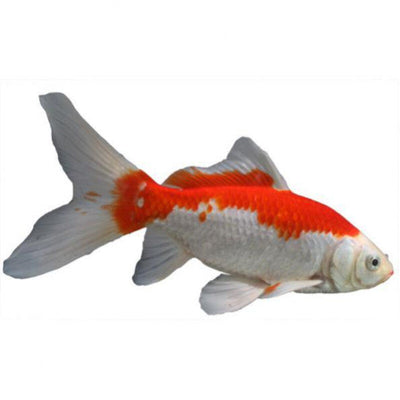
With its red patches on a white background, the Sarasa offers easy-to-follow contrasts in a pond. It is one of the goldfish offered by Aquiflor and attracts those who like two-tone coats. The Sarasa remains a goldfish, with the needs of an animal that grows, swims actively, and requires monitored water. Its small size at the time of purchase should not define its home for life.
Before choosing a few specimens, take the time to distinguish its coloration, shape, and the conditions of your pond. This preparation allows you to enjoy its colors without discovering too late a problem of space or filtration.

What is a Sarasa?
The name Sarasa refers to a red and white coloration in the goldfish, Carassius auratus. It is not a distinct species. In ponds, we find notably forms close to the common goldfish and comets, with a slender body and a simple tail more or less developed.
This clarification helps to understand the commercial names. A red pattern on the head, a particularly long tail, or a stockier silhouette can lead to additional names. Always ask to see the fish concerned: two offers bearing the word Sarasa do not necessarily describe the same form or the same size.
The red and white areas make up very different patterns from one individual to another. You can choose a contrast that you like without looking for perfect symmetry. A selection for a family pond rests above all on fish in good condition and a suitable installation.
Sarasa or koi carp: how to distinguish them?
The red and white coloration can be reminiscent of that of certain koi, but the two fish belong to different species. Koi are carp and have barbels around the mouth; goldfish do not have them. Their silhouette, development, and the requirements of the installation must also be taken into account.
So do not buy a Sarasa thinking it is simply a miniature koi. Conversely, a very small koi does not become a fish suitable for a small container because it looks, at first, like a young goldfish. For a beginner, having the identification confirmed at the store is a simple precaution.
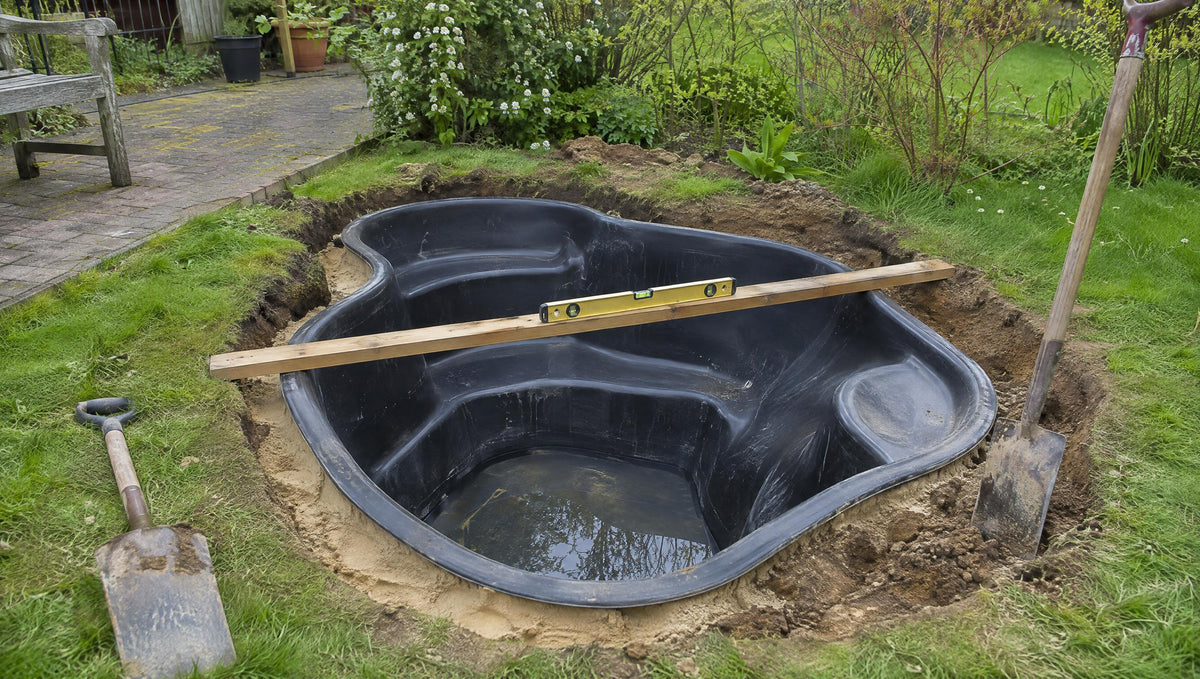
What space to plan in the pond?
Goldfish can reach several dozen centimeters depending on their shape and their keeping conditions. The Aquiflor sheet mentions an adult size that can go up to 40 cm for the Sarasa; this figure should be understood as a potential, not as the guaranteed size of each specimen. The installation must anticipate fish significantly larger than those in the sales tank.
Also read: How many fish can be accommodated in a pond?
To decide on the stocking, gather the actual volume, depth, swimming surface, filtration, and fish already present. A rule in isolation of the type "one fish for so many liters" does not describe all this. A pond very cluttered with baskets also leaves less useful space than a simple external measurement suggests.
In a mini-pond on the terrace, the volume and temperature can vary quickly. A plant arrangement without fish is often easier to keep consistent. If you want Sarasas, have the project checked before buying them, also planning for their reception during cold and heat episodes.
Prepare suitable water and functional filtration
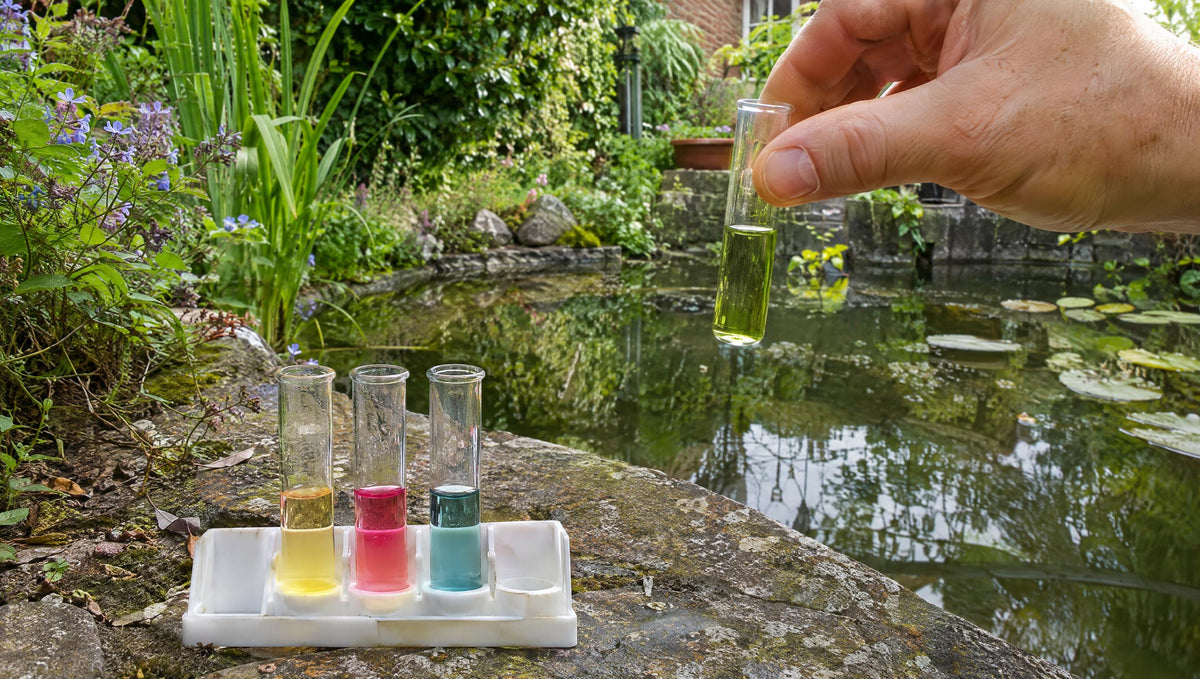
Transparent water is not necessarily suitable water. Ammonium/ammonia and nitrite tests are particularly useful at startup and after an increase in stocking. The biological filter must be able to process the waste produced by the fish and their food.
The JBL ProAquaTest CombiSet pond allows notably to check these compounds, the pH, and the hardness. Record the results with their date. You will thus have a useful history if the fish change behavior.
When the context justifies it, Aquipond NitriBoost for pond can accompany the biological filtration according to its instructions. Its use does not exempt from checking the water nor from leaving the installation time to adapt to a new load.
Where to buy Sarasas and what to check?
The Sarasa sheet on Aquishop presents several sizes of fish. Check the availability and the terms of reception or delivery before finalizing your project. A size indicated in the catalog does not guarantee the immediate presence of the desired lot.

Observe the swimming, breathing, fins, and the condition of the skin. Ask for the origin of the lot and the food currently distributed. An anomaly visible on several fish from the same circuit deserves an explanation before purchase. Also plan a suitable quarantine when a population is already present at your home.
Organize the journey and acclimation with the seller. The transport time, temperature, and packaging determine the instructions to follow. Preparing the arrival before departure allows to avoid rushed handling once the fish are at home.
How to feed a Sarasa?
Use food intended for goldfish and a size that the specimens can swallow. Aquifood Pond Fish Food Mix Goldfish Floating 3 mm is an option for fish capable of consuming this diameter. Its floating presentation facilitates the observation of the meal.
Distribute a controlled quantity and watch if everyone eats. Adjust the ration to the water temperature, activity, and food instructions. Do not pour more to compensate for a fish that stays back: first look if the size, competition, or its general condition explains the situation.
A small measuring container and a person in charge of feeding avoid double distributions. Keep the food dry, close the packaging, and choose a format compatible with your consumption. Freshness and storage deserve as much attention as the name of the range.
With which fish can it coexist?
Compatibility does not depend only on the peaceful nature of a species. You must compare the swimming speed, access to food, adult size, and the needs of the environment. The very slow forms of goldfish can be disadvantaged against active comets. With koi, it is also the overall capacity of the pond that must be re-evaluated.
Avoid adding several species to visually fill all areas of water. A well-monitored group and free space often offer a more pleasant observation than a stocking difficult to feed fairly. Have the planned associations validated before purchase.
Maintenance and reproduction: think through the seasons
Monitor the filter flow, remove accumulated leaves, and observe the fish regularly. In autumn, adapt the food to the cooling water. In summer, be attentive to hot periods and oxygenation. Changes are decided according to the real pond, not solely according to the calendar date.
Spawning can occur when conditions are favorable. Not all eggs and fry survive, but a population can nevertheless increase. Anticipate the possibilities of welcoming the young and never release ornamental fish into nature.
Preparing the reception of Sarasas with Aquiflor: send a photo of the pond, its volume, the equipment, and the current population. This information will allow to discuss the number of fish and the equipment that is actually useful.
To go further:
- Tamasaba: discover this goldfish and prepare its reception
- Koi carp farming: needs, installation, and limits to know
Sources and references
- Aquiflor: presentation of the Sarasa.
- OATA: identification and development of goldfish.
- OATA: maintenance and reception of pond fish.
- FAO: characteristics of carp, notably the barbels, with the Aquishop sheets of the products mentioned.