In short: anodontes mussels filter water continuously, without electricity, and capture fine particles and microalgae. Combined with an oxygenating submerged plant like hornwort and marginal plants, they give clarity to the water a real boost. Allow for 4 to 5 mussels per 1,000 litres, a loose bottom where they can bury themselves, fish in the pond, and relatively clean water. They enhance your filtration; they do not replace it. This guide, written with the Aquifarm team that raises and selects our mussels in Nodebais, explains everything.
How a mussel filters water
The anodontes mussel is a large freshwater bivalve, related to sea mussels. It lives half-buried in the bottom, with the back part of its shell slightly open. Through a siphon, it draws in water, passes it over its gills, which retain fine particles, microalgae, and some suspended organic matter, then releases clearer water. It feeds on what it filters: it is therefore a living filter that works day and night, without a pump or electricity consumption. Its action is gradual: improvement is generally observed over several weeks, not overnight.


Conditions for success
Anodontes mussels thrive in a pond that meets these conditions. If one is missing, it is better to correct it before introducing them.
- Fish: they are essential to the mussels' life cycle, as their larvae temporarily attach to fish. A pond without fish is not suitable for them in the long term.
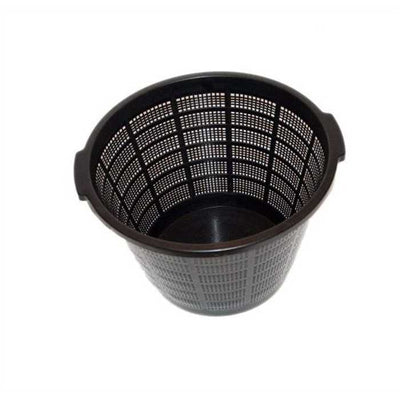
- A loose or silty bottom, silt or fine sand, in which they can bury themselves. On a bare liner, place them in a container or planting basket filled with fine sand.
- Good water quality, with low pollution and an existing filtration system.
- No harsh chemical treatments: some products against algae or parasites are not suitable for molluscs. Always read the instructions.

Is your water ready for mussels?
Mussels like healthy water. Have it tested for free at Aquiflor in Nodebais, or test it yourself at home with the Sera kit.
Test my water for free →How many mussels for your pond?
Our experts recommend 4 to 5 mussels per 1,000 litres of water. It is better to stick to this guideline than to add more: in a pond overcrowded with mussels, they will lack food and decline, polluting the water instead of clarifying it.
| Pond volume | Recommended pack | Contents |
|---|---|---|
| 1 to 5 m³ | 1 to 5 m³ pack | 20 mussels, 5 hornworts, 10 Butomus |
| 5 to 10 m³ | 5 to 10 m³ pack | 50 mussels, 10 hornworts, 20 Butomus |
| 10 to 20 m³ | 10 to 20 m³ pack | 80 mussels, 20 hornworts, 40 Butomus |
The 20 mussels in the small pack correspond, for example, to the guideline for a pond of around 4 to 5 m³. For a smaller pond, only introduce some of the mussels and keep the others for a second pond, or start with a smaller number.

1 to 5 m³ pack
20 mussels + plants

5 to 10 m³ pack
50 mussels + plants

10 to 20 m³ pack
80 mussels + plants
The plants that complement the mussels
Effective natural filtration relies on several stages. The mussels work at the bottom; the plants take over in the water and along the banks.
- Hornwort (Ceratophyllum demersum): a perennial submerged plant that oxygenates and purifies. It forms beds up to 60 cm high, can be planted at depths of up to 120 cm, withstands temperatures down to -15 °C, and loves the sun. It consumes nutrients directly from the water, competing with algae.
- Butomus umbellatus, or flowering rush: a filtering marginal plant with beautiful pink flowers in June-July. It is planted at depths of -5 to -30 cm from the crown, reaches 80 to 120 cm, and grows in the sun or partial shade. Its roots filter the edges of the pond.

Introducing the mussels step by step

- Prepare the bottom: if your pond has a liner, fill a container or a planting basket with 10 to 15 cm of fine sand and place it at the bottom in a calm area.
- Acclimate: leave the sealed bag floating for a good half hour to equalize the temperature.
- Place the mussels flat on the loose bottom, gently and away from the pump's suction. They will bury themselves.
- Start gradually: introduce a few individuals, observe them for several weeks, then add the next ones.
- Plant the hornwort and Butomus at the depth indicated for each plant.
Aquiflor tip: a healthy mussel buries itself partially and moves slowly from day to day; its traces in the sand show this. A mussel that remains wide open at the surface and no longer reacts to touch should be removed so as not to pollute the water.

What to expect, and what not to expect
Mussels and plants gradually improve the clarity of the water and the balance of the pond. They are particularly useful against slightly cloudy water and microalgae, and they enrich the life of the pond. However, they do not replace mechanical and biological filtration, nor a UV-C in a very sunny and heavily populated pond. Consider them a natural, durable, and economical reinforcement that works continuously alongside your filter.
To avoid: harsh chemical treatments, complete bottom cleanings that unearth the mussels, and pond vacuums passed over the area where they are installed. Mark this area to spare it during maintenance.
When to introduce them?
The best period extends from spring to early autumn, when the water is temperate and the mussels and plants can settle in before winter. We ship the plants on Mondays and Tuesdays (hornwort in a net, Butomus in 3.5 cm pots). The live mussels leave every Monday morning, until December 20, so they never spend a weekend in transit.
Mussels, plants, and filter: the winning combination
In a typical 10 m³ garden pond with goldfish, the most effective combination combines a suitable filter with UV-C, a small air pump, the 5 to 10 m³ natural filtration pack, and plants covering about a third of the surface. The filter retains waste and converts ammonia, the UV controls green water, the mussels continuously refine the clarity, and the plants consume the remaining nutrients. Each element relieves the others.

Maintenance throughout the seasons
- Spring: check the condition of the mussels during the first cleaning, remove empty shells, and top up if necessary.
- Summer: monitor oxygen during hot weather, as mussels also consume it. Trim the hornwort if it becomes overgrown.
- Autumn: cut the withered stems of the Butomus and remove the leaves that have fallen into the pond.
- Winter: the mussels sink deeper and slow down. Leave them alone.
Finally, note the exact location of your mussels on a small plan of the pond. During the spring cleaning, you will know where to use the vacuum safely, and you can easily check their condition every year.
Frequently asked questions
Do mussels reproduce in the pond?
This is possible when fish are present, because the larvae need them to develop. This is precisely why fish are essential to their life cycle.
Can mussels be put in a koi pond?
Koi dig a lot in the bottom and can unearth the mussels. In a koi pond, prefer a protected area, away from the fish, or ask us for advice before you start.
Are mussels enough for a pond without a filter?
In a small, heavily planted pond with few fish, mussels and plants may be enough to maintain balance. As soon as the fish population increases, filtration remains essential.
A question about your pond? Come to Nodebais to see our mussels and plants at Aquifarm, or write to us at support@aquiflor.com with the volume and a photo.