In short: not all pond bacteria do the same job. Nitrifying bacteria (NitriBoost, EcoTreat Nitrifier) establish the filter at startup. Maintenance bacteria (Bactogen, EcoTreat Maintenance, Bacto Maintenance) keep the balance throughout the season. Cleaning bacteria (Biobooster+, Bactovase) break down sludge and accumulated organic matter. This guide explains the role of each, the dosages, and how to combine them over a year without wasting.
Why add bacteria to a pond
A healthy pond is first and foremost a biologically active pond. Billions of bacteria live on the filter sponges, on the stones, on the liner, and in the sludge. They transform fish waste, break down dead leaves, and limit the nutrients available to algae. This flora establishes itself naturally, but slowly, and it is weakened by winter, overly vigorous cleaning, treatments, and high temperatures. Bacteria in bottles or powder serve to speed up its establishment, strengthen it, and treat specific problems such as sludge buildup.

1. Starting up: nitrifying bacteria
Nitrifying bacteria transform ammonia, which is highly toxic, into nitrites, then into nitrates, which are well tolerated by fish and consumed by plants. They are essential in a new filter, after a complete cleaning, or when restarting in spring.
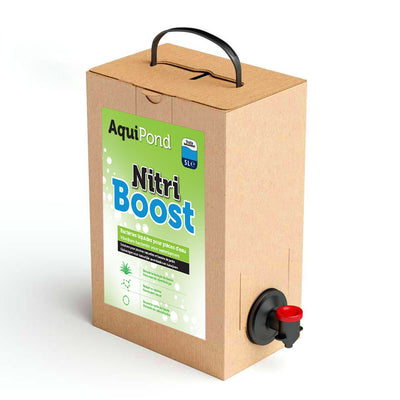
- Aquipond NitriBoost: liquid nitrifying bacteria, 1 liter per 10 m³, in water above 10 °C, with the UV turned off during treatment. Available in 2.5 L and 5 L.
- EcoTreat Nitrifier: 1 liter per 10 m³, it speeds up the creation of the nitrogen cycle. We recommend it for new ponds and the start of the season.
2. Maintenance: maintenance bacteria
Once the filter is running, it needs to be maintained. Maintenance bacteria strengthen the existing flora, help break down waste over the weeks, and limit fluctuations in water quality. These are the ones we use for the longest time during the year.
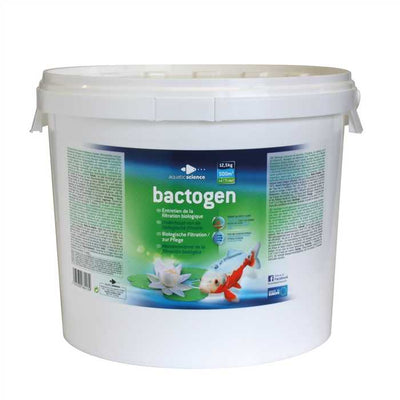
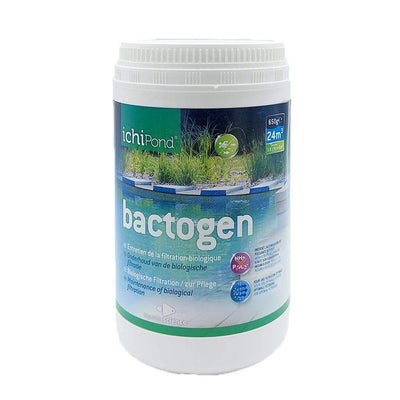
- Bactogen: a concentrated mixture of 100% sporulated bacteria, enzymes, minerals, and trace elements. The sporulated form is the resistant form of bacteria, which stores well. It is used for both startup and maintenance, almost all year round. Formats for 24 m³, 40 m³, and 200 m³. Store in a dry place, between 10 and 25 °C, for 12 months.
- EcoTreat Maintenance PRO: highly concentrated, 1 kg treats 100 m³ of water for one year. Designed for large volumes, it limits organic waste and improves clarity. It is also available in Maintenance and Koi Maintenance versions.
- Aquipond Bacto Maintenance Pro: an ultra-concentrated mixture that treats 100 m³, usable regularly, even in cool water down to 10 °C.

Bactogen
Filter maintenance

EcoTreat Maintenance PRO
100 m³ for one year

Bacto Maintenance Pro
From 10 °C
3. Cleaning: bottom bacteria
When sludge accumulates, filamentous algae establish, or the water becomes loaded with organic matter, specialized bacteria are needed to break down this material.
- Biobooster+ restarts bacterial activity, breaks down organic matter, and acts locally on filamentous algae. It is available in sizes from 3 m³ to 500 m³.
- Bactovase is specialized in sludge from natural ponds. It is dosed by surface area, between 100 and 200 g per m² depending on the sludge buildup.
Simply put, the Biobooster+ and Bactogen 40 m³ pack combines cleaning and maintenance: Biobooster+ resets the pond, and Bactogen then maintains the biological balance throughout the season. It is also available for 24 m³.
The annual calendar we recommend
| Period | Objective | Bacteria |
|---|---|---|
| March-April, water > 10 °C | Restart the filter | Nitrifying, UV off |
| April-May | Clean the bottom | Biobooster+ or Bactovase |
| May to September | Maintain the balance | Maintenance according to the instructions |
| After filter cleaning or treatment | Rebuild the flora | Nitrifying or maintenance |
| October | Prepare for winter, break down leaves | Second dose of bottom bacteria |
Three golden rules: turn off the UV during bacterial treatments, as it would partially destroy them; do not start a treatment in cold water below 10 °C, where bacteria work very little; and never combine bacteria with a chemical antiparasitic or anti-algae treatment on the same day.

How to properly apply bacteria
- Measure your volume: length × width × average depth, multiplied by 0.8 for an irregular shape. This is the basis for all dosages.
- Turn off the UV 24 hours before and for a few days after treatment.
- Pour in the right place: filter bacteria into the filter inlet or near the pump intake; bottom bacteria spread over the entire surface.
- Keep the pump and aeration running: bacteria need oxygen and circulation.
- Note the date to follow the dosing schedule of the chosen product.
Mistakes that cancel out the effect of bacteria
- Rinse filter sponges under the tap: chlorine and thermal shock eliminate the flora. Rinse in the pond water.
- Clean everything at the same time: filter, bottom, and walls on the same day. This destroys the balance all at once.
- Keep an old opened bottle in the sun: bacteria are stored in a dry place, away from heat and frost.
- Expect a miracle without filtration: bacteria strengthen a system, they do not replace the pump, filter, or aeration.
- Neglect minerals: in water that is too soft, bacteria lack the carbonates needed to work. Maintain a correct KH and a GH of at least 12 °dH.
Workshop tip: always combine bacteria with oxygen. A small air pump with a diffuser at the bottom multiplies their effectiveness, especially for breaking down sludge and during hot periods.
Small, medium, or large pond: what to choose?
- Garden pond from 5 to 20 m³: NitriBoost at startup, then Bactogen for maintenance. Biobooster+ once or twice a year if the bottom becomes loaded.
- Koi pond: highly stressed filter flora, regular maintenance with Bactogen or EcoTreat Koi Maintenance, and nitrifying bacteria after each major cleaning.
- Large pond or body of water: EcoTreat Maintenance PRO or Bacto Maintenance Pro, highly concentrated, and Bactovase for sludge.
Special cases
After treatment against parasites or algae: many treatment products also weaken the filter flora. Once treatment is finished and the water is partially renewed, restart the filter with nitrifying bacteria, then resume normal maintenance.
After a pump failure: if the filter has been without circulation for several hours in summer, some bacteria may have died from lack of oxygen. Gently rinse the sponges in the pond water, restart, then add nitrifying bacteria and monitor nitrites for one week.
In natural swimming pools: choose products formulated for swimming, such as Bactoswim for sludge or BactoPool for biological filtration. They follow the same principles, with formulas designed for ponds where people swim.
In spring, when the water remains cool: do not rush. Wait until the water consistently exceeds 10 °C; before that, the added bacteria work very little and much of them are lost.
Frequently asked questions
Can you overdose bacteria?
A slight excess is not dangerous, but it does not help: bacteria grow according to the available food. It is better to follow the dosage and schedule.
Are bacteria safe for fish and plants?
Yes, they are natural microorganisms. They are part of the pond ecosystem. Simply monitor oxygen during a major sludge treatment.
How long before seeing results?
Nitrifying bacteria act within a few days to two weeks depending on the temperature. Bottom bacteria work over several weeks, or even a season for thick sludge.
Unsure about the product or dosage? Send us the pond volume, the type of fish, and a photo to support@aquiflor.com: we will offer you a program for the season.