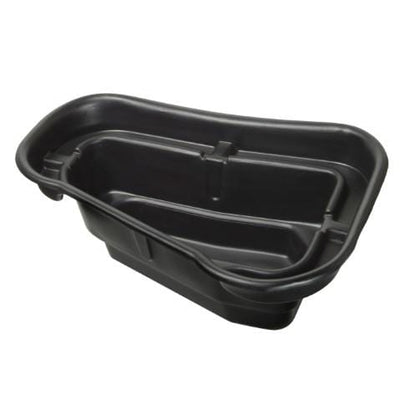
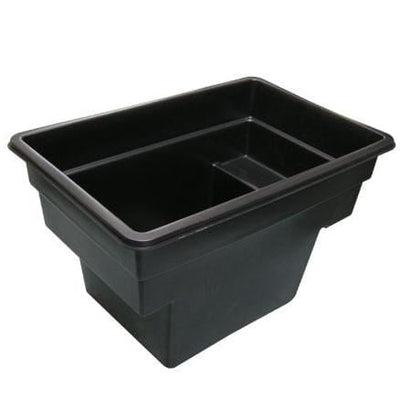
A preformed pond allows you to start with a known shape and volume to create a water feature in the garden. The shell defines the contours, the bottom and, depending on the model, the shelves intended for plants. The right choice depends above all on the intended use, the depth and the space available around the pond.
Before ordering, take the time to mark out its location and examine the interior profile. Two shells of similar capacity can yield very different results: one offers more surface area, the other a volume more concentrated in depth.

What project is a preformed shell suitable for?
This solution is suitable when you want to choose a defined format and organize the garden around it. It allows you to quickly visualize the final footprint and the available depths.
However, the shape remains that of the model purchased. If you are looking for very specific dimensions, a long sloped beach or an installation that precisely follows the terrain, a flexible liner can offer more freedom.
The preformed pond does not eliminate the need for soil preparation. Its bottom and shelves must be properly supported, and leveling requires care. A rigid shell should not be used to hide an improperly adjusted excavation.
Start with the living project
A pond intended for insects and amphibians does not have the same needs as a pond with fish. For a project focused on spontaneous wildlife, planning plants, refuge areas and easy access to the water is a good basis.
Also read: Building a pond in your garden: where to start?
If you want fish, have the species, adult size, actually available volume, depth and necessary equipment studied. The volume indicated on a shell is not an automatic authorization to install a given population in it.
A small shallow pond requires special attention to temperature and level variations. For koi, you should consider a specifically sized project, with a volume and filtration adapted, rather than choosing a small shell as a temporary solution.
Compare dimensions, not just liters
Here are three formats offered on Aquishop. The dimensions and capacities below are those announced on the product sheets; the volume of water actually introduced will depend on the filling level and the arrangements.
| Model | Announced dimensions | Announced capacity | Point to examine |
|---|---|---|---|
| Ubbink Start 250 | 135 × 105 × 46 cm | 250 liters | Compact footprint and basket placement |
| Ubbink Start 500 | 179 × 140 × 50 cm | 500 liters | Available surface for varied planting |
| Ubbink Quadra C1 | 118 × 78 × 70 cm | 520 liters | Deeper format, rectangular installation |
These examples show why a comparison by volume alone is insufficient. Check the width of the shelves, their depth underwater and access to the bottom. Also think about the space the plants will take up once they are adults.

Choosing the location in the garden
Place a hose or rope on the ground to represent the footprint. Keep a passage allowing you to reach the plants and equipment. Look at the pond from the terrace or window: the location should also allow you to enjoy it.
Also read:
Observe the sunlight at different times of the day. Partial shade can be useful, but the needs of the selected plants remain to be considered. Nearby trees bring leaves and can complicate the earthworks with their roots.
Identify the areas where runoff carries soil toward the future pond. Also check underground networks before digging. If the soil is unstable or very wet, ask for advice on the preparation and drainage necessary for the chosen model.
Preparing the installation methodically
The shell's instructions remain the reference for the job. Generally, you need to reproduce the different levels in the excavation, remove interfering elements and prepare a level base.
Leveling is checked on several axes. The bottom and overhanging areas must be supported without pressure points. A void under a shelf should not be left hoping that the weight of the water will correct the situation.
Filling and backfilling are done gradually according to the manufacturer's instructions, checking that the shell remains stable and horizontal. The material around the pond must support the whole without deforming it.
Before finishing, observe the level and the banks. It is easier to correct an installation at this stage than after placing all the stones and plants. Do not use a shell intended to be buried as an independent above-ground tub without explicit validation from the manufacturer.
Adapting the planting to the shelves
The planting baskets facilitate the positioning of the plants and their maintenance. Their width must fit on the shelf and their height changes the depth of water above the crown.
Choose the plants according to this actual depth, their growth and the exposure. A small identified variety of water lily will be easier to integrate than a plant whose spread and requirements are unknown.
The selection of aquatic plants allows you to prepare a composition. Keep a part of the water clear to observe the pond and intervene. A planting measured at the start leaves room for growth.
Planning access for small wildlife
The walls of a shell can be difficult for an animal that has fallen into the water to climb over. Create a stable and rough exit connecting the water to the bank, taking into account the variations in level.
The exit must remain usable after the plants have grown. Avoid unstable stacks and elements that risk slipping. Around a pond for wildlife, bank vegetation and a few nearby refuges extend the appeal of the water feature.
Pump and filtration: decide according to use
A planted pond without fish does not systematically need a filter. If you want a water feature, its equipment is chosen according to the desired effect and the protection necessary for small organisms.
For a compatible decorative fountain, a pump like the Aquarius Universal Classic 600 can be considered. Its suitability depends on the lift height and the circuit. With fish, circulation and filtration must be studied together.
Keep the equipment accessible and plan for its maintenance from the start. A small waterfall added later may require more space, hose, and water reserve than expected.
Preparing the complete order
The budget must include the shell, soil preparation, finishing touches, plants and any equipment. Also check the access to the garden, transport and delivery or pickup terms.
Send the available dimensions and a photo of the location to support@aquiflor.com. The team will be able to help you compare the shells and prepare the useful accessories. You will thus start with a format compatible with your garden and with the pond you want to bring to life.
Sources and useful documents
- Royal Horticultural Society — pond construction and shell installation.
- Royal Horticultural Society — access and arrangements for wildlife.
- Ubbink / Outside Living Industries — equipment notices.
- Aquishop sheets for Start 250, Start 500, Quadra C1 ponds and the accessories mentioned.