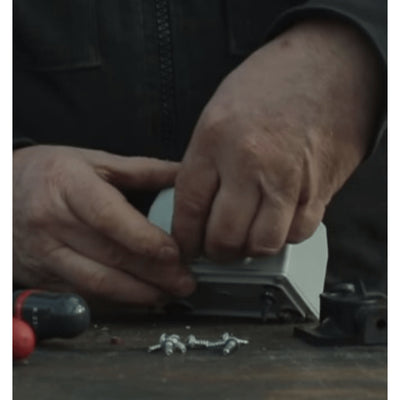
A red light or buzzer on a SECOH air pump indicates that the installation requires attention, but it does not specify which part is at fault. The first useful step is to identify which device is triggering the alarm, note the exact pump model, and check whether air is still reaching the end of the circuit.
A pond pump, a pump with a built-in pressure alarm, and the control box of a micro-treatment plant do not signal the same thing. Start with the nameplate and the manual supplied with your installation.

What does a SECOH pump alarm mean?
On the JDK-AL 60, 80, 100 and 120 models described by the distributor BIBUS, the built-in low-pressure alarm is triggered at 7 kPa. This threshold applies to these versions: do not automatically apply it to another model or an external control box. A pressure alarm indicates a condition at the point of measurement; it is neither a water test nor a dissolved oxygen measurement.
Some models also have an automatic safety shut-off, distinct from the low-pressure alert. A micro-treatment plant may add its own alarm logic. Photograph the indicator light, any message, and the labels before touching anything.
Note the circumstances before resetting
Power outage, heavy rain, maintenance, disconnected hose, nearby construction? Did the noise change gradually, or did the pump stop suddenly? Note the time, and whether the alarm is continuous or intermittent. A buzzer that falls silent after a power cut and restoration does not prove that the fault has been resolved.
Initial checks, from the outside only
Look for visible damage, water near electrical parts, a detached hose, or a blocked ventilation grille, without opening the cover. A wet electrical connection, damaged cable, burning smell, or tripped circuit breaker requires a professional. Do not touch a wet socket. Before performing any maintenance authorized by the manual, disconnect the pump. On a micro-treatment plant, leave the tank covers in place and never lean into a tank.
Follow the path of the air, not just the noise
A blower may appear to be running while delivering little useful air. Follow the accessible hose: loose connection, split hose, tight bend, or recently altered route? Distinguish between two cases: air is escaping before the diffuser, or the resistance has become too high. They trigger different alarm responses. BIBUS recommends checking the back pressure, especially after an initial failure: replacing the pump without removing the restriction will not solve anything. On a micro-treatment plant, do not randomly change the valves: air distribution is part of the process.
Air intake and the environment
The pump must draw in clean air. Dust, leaves, or a poorly ventilated enclosure disrupt its operation. Clean or replace the air filter according to your model's manual. An overly sealed enclosure protects against rain but traps heat. If the location has flooded, tell the technician before reconnecting.
Diaphragms and valves: when are they at fault?
Diaphragms and valves are wear parts in this type of pump. Their condition can explain a loss of performance, but the diagnosis must also take the air circuit into account. Aquishop offers genuine SECOH diaphragm and valve kits for several families (JDK, JDKS, SLL, MKC, ELS). This is not a universal kit: provide the full model and serial number before ordering. If the safety shut-off has been triggered, understand the cause and never bypass it.
If the pump aerates a garden pond
Observe the fish as much as the equipment: fish gathered at the surface, rapid breathing, or a sudden change in behavior require a quick response. Check the water and install a suitable backup aeration system if necessary. Heat and a high fish load make oxygenation more urgent. The JBL ProAquaTest CombiSet Pond kit covers several useful parameters, but not dissolved oxygen. A replacement pump is chosen based on the depth of the diffusers and the circuit: the SECOH JDK-S 80 is an option to consider, not an automatic replacement. See the full range of SECOH air pumps.
Also read:
- Choosing a pond pump: understanding flow rate, height, and volume
- How to choose an air pump suitable for your pond?
- Pond pump: calculating its electricity consumption
If the pump supplies a micro-treatment plant
Air supports biological treatment. Contact the maintenance provider quickly and follow the installation's procedure. Limit water use during the diagnosis, especially in the event of a high-level alarm. Do not shut down the entire plant just to silence the alarm, and do not bypass the process. Bacteria and pond products will not repair a broken blower.
Repair or replace?
It all depends on the identified damage, the available parts, and the electrical condition. For a replacement, compare the air flow rate to the actual operating pressure, the power supply, the connections, the dimensions, and the alarm interface: a maximum flow rate measured without resistance is not enough.
Pre-call checklist
- Full model, serial number, and electrical specifications.
- Photos of the pump, the alarm, and accessible connections.
- Use: pond or micro-treatment plant (brand and model).
- Start of the alarm, recent interventions, or power outages.
- What is still working and what has already been checked.
Frequently asked questions
Why is my SECOH pump buzzing?
The alarm often indicates abnormal air pressure: a leak in the circuit, a disconnected hose, a restriction, or worn parts. Note the exact model and follow the path of the air before resetting.
Can I change the diaphragms myself?
The replacement of diaphragms and valves is designed for many models, with the kit corresponding to the exact reference. Always disconnect the pump and follow the manual; if in doubt, entrust it to a workshop.
Which diaphragm kit is right for my pump?
It depends on the family and the model (JDK, JDKS, SLL, MKC, ELS...). Provide the full model and serial number: the appearance of the old diaphragm is not enough.
Are my fish in danger if the air pump stops?
The risk increases in hot weather and with many fish. Monitor their behavior and install backup aeration if necessary while the repair is carried out.