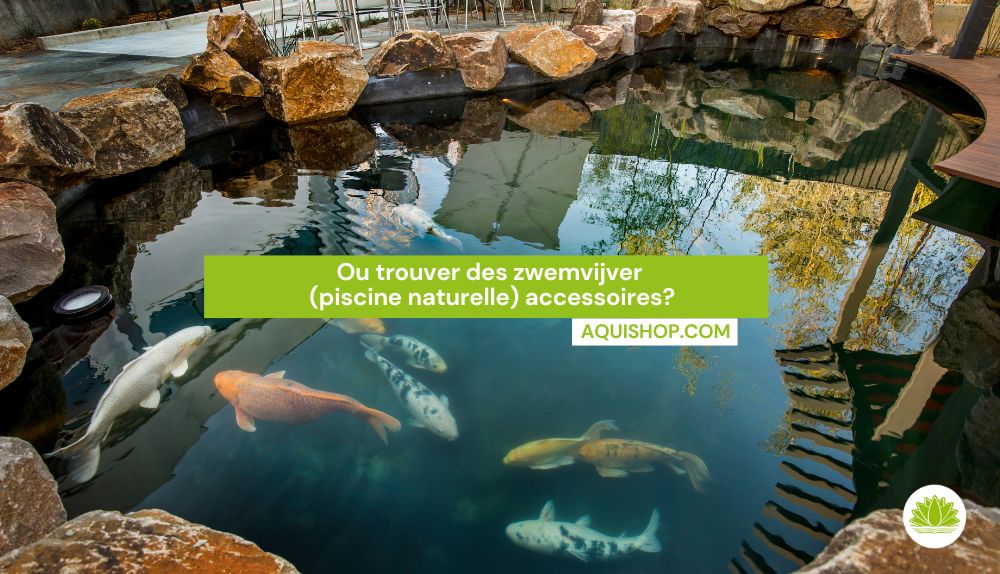
Healthy, balanced water is essential for the proper functioning of your natural swimming pool, pond, or lake. At Aquiflor, we put our expertise in water management and our professional equipment at your service to diagnose your issues and propose tailored solutions.
Thanks to our small laboratory located in Nodebais, as well as our possible interventions anywhere in Belgium, we ensure precise and personalized monitoring for your aquatic spaces. We also have partners throughout France to analyze your natural swimming pools.
Why analyze the water of your natural swimming pool or pond?
Water analysis allows you to monitor and improve the performance of your natural treatment system. If you observe signs such as:
Filamentous algae problems or green water;
Siltation or excessive deposits at the bottom of your pond;
Deterioration of plants in your lagoon or phytoremediation zone;
Fish mortality or ecological imbalance;
it is time to conduct a complete analysis to identify the causes and act quickly.
Our analysis services: on-site and in the laboratory
1. On-site analysis with field measurements
During our visits, we use precise measuring instruments to directly assess the main parameters of your water on site:
pH: Key indicator of acid-base balance.
Conductivity: Measurement of dissolved salts, revealing the overall quality of the water.
Dissolved oxygen: Essential for aquatic life and biological balance.
Redox potential: Indicator of the chemical and biological activity of the water.
Hardness (GH) and alkalinity (KH): Crucial parameters for the stability of the ecosystem.
Ammonia (NH4) and Nitrites (NO2): Signs of insufficient biological filtration or organic overload.
Nitrates (NO3) and Orthophosphates (PO4): Factors promoting algae growth.
These analyses allow you to make immediate decisions to correct any imbalances.
2. In-depth laboratory analysis
For specific needs, we work in collaboration with accredited laboratories to perform detailed analyses. These tests allow us to go beyond the basic parameters and assess aspects such as:
COD, BOD5, TSS, VSS: Parameters indicating the organic load of the water.
NOK, Total N, Total P: Assessment of the nutrients present in the water.
Microbiological analysis: Presence of total coliforms, Escherichia coli, enterococci, Pseudomonas aeruginosa, etc.
This data allows us to guarantee not only clear water, but also optimal management of health risks.
Our approach: expertise and tailored solutions
As water body experts, we do not stop at providing a diagnosis. We also develop a complete action plan, adapted to your needs:
Lagoon maintenance and addition of specific bacteria to restore biological balance.
Improvement of filtration systems or installation of complementary solutions.
Personalized support to optimize the management of your pond throughout the year.
Whether you are an individual or a company, our team travels throughout Belgium to help you preserve the beauty and health of your aquatic spaces.
Make an appointment with our experts
Need a water analysis? Contact our team in Nodebais for a quick intervention or come directly to our laboratory. Together, we will find solutions to guarantee a healthy ecosystem and ideal water in your natural swimming pool or pond. 🌿
How to perform comparable measurements?
- Choose a representative monitoring point. Define it with the professional who monitors the pool and keep this marker for regular measurements. If an area appears abnormal, it may require an additional identified sample.
- Prepare the equipment. Check the dates, the cleanliness of the test tubes, and the safety instructions for the reagents. Do not use a container contaminated by a household product.
- Follow each instruction sheet. The volume of water, the order of the reagents, the agitation, and the reading time vary depending on the test. There is no single procedure valid for the entire kit.
- Read with the correct comparator. Use the provided scale, under the recommended lighting conditions. A screenshot or a color chart from another brand can distort the interpretation.
- Note the context. Record the date, time, temperature, results, and recent events. A result outside the range deserves a verification according to the instructions.
Do not pour the samples containing reagents back into the pool. Store the equipment as indicated by the manufacturer, out of reach of children. If a dosage seems inconsistent, first check the sample, the reagent, and the method before correcting the water.
When to increase monitoring or suspend swimming?
The calendar must include commissioning, usage, and unusual events. An isolated monthly analysis does not necessarily cover a hot, heavily used period, significant runoff, or a circulation failure. Define regular controls and checks after an incident.
Read also:
In the presence of a suspicious discharge, pollution, unusual proliferation, or symptoms in several swimmers, stop swimming and request a suitable assessment. Water that has become clear again after filtration is not sufficient proof to resume.
Cyanobacteria require special attention. Some can produce toxins; a color, foam, or deposit does not allow for a diagnosis on its own. The Walloon Public Service recommends avoiding activities in suspicious water. Also keep animals away and contact the competent interlocutors for further testing.
To go further:
- Natural swimming pool in Belgium: preparing your project
- Pond or natural swimming pool losing water: leak or evaporation?
- Building a biological swimming pool: the steps to plan