
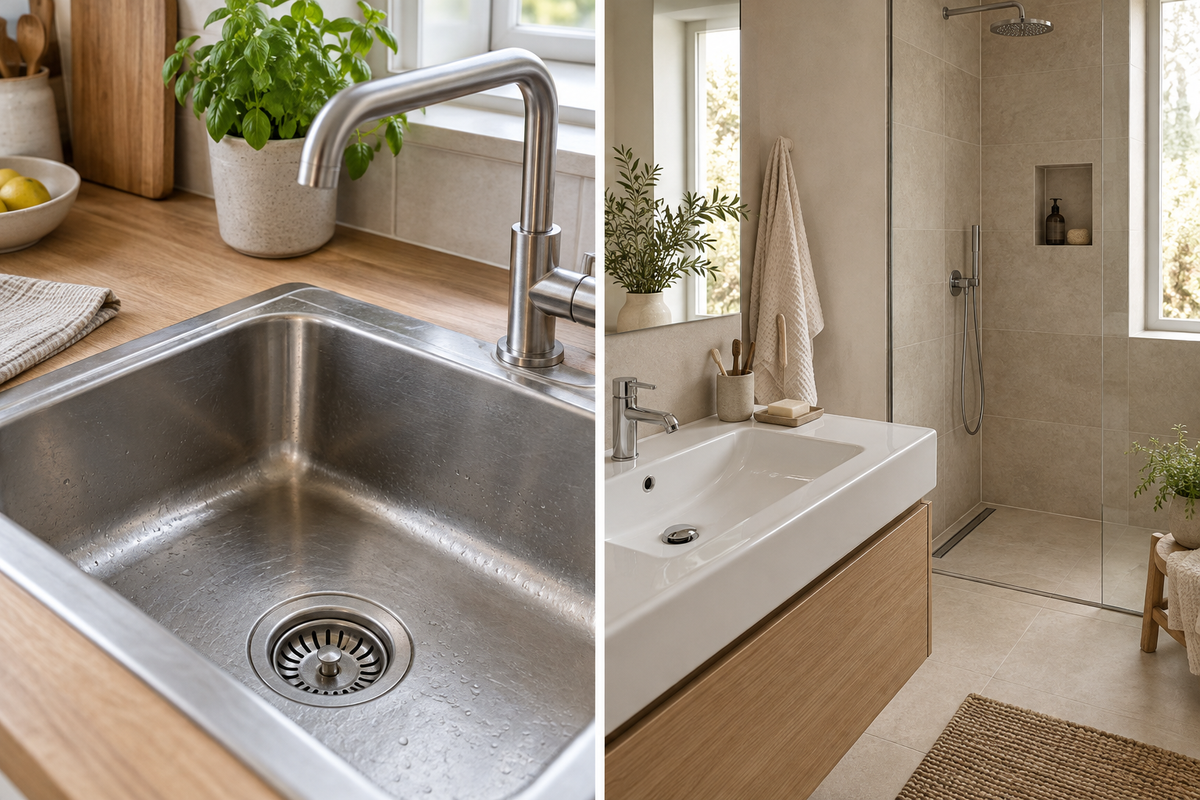
An odor in the kitchen is not investigated in quite the same way as an odor in the shower. The waste, equipment, and connections differ. However, the method remains the same: locate the affected point, observe its operation, and proceed without mixing products.
This guide offers a room-by-room walkthrough. It will help you distinguish between routine maintenance and a plumbing problem and prepare precise information should professional intervention be required. Always start with visible observations, without dismantling recessed elements.

In the kitchen: start around the sink
The strainer and the drain
Remove any debris caught in the strainer and examine the accessible parts of the drain. Food residue may be present even when the basin appears clean. Clean the components designed for maintenance using a method compatible with the material, then put them back in place.
Use this check to observe the drainage. Does the water flow away normally? Does the level rise before receding? A gradual change over several days is worth noting. The presence of an odor alone does not prove that a clog exists, whereas slow drainage provides an additional clue.
The overflow and visible connections
If the sink has an overflow, consult the manufacturer's instructions for its maintenance. Do not insert a rigid object into it and do not dismantle any unfamiliar fasteners. Cleaning should remain limited to elements designed to be accessible.
Next, open the cabinet, without bringing your face close to the pipes. Look for signs of moisture, displaced connections, and any recent modifications. Photograph the entire setup before asking for advice: a view that is too close-up on a nut may make it impossible to understand the connection.
The dishwasher and its surroundings
An odor noticed after a cycle can come from several places: the appliance, the maintenance filter, a neighboring sink, or the drainage connection. Note the exact time and only clean the parts specified in the dishwasher's manual.
Do not randomly alter the height or layout of its hose. Requirements depend on the model and the installation. If the odor appeared after a appliance replacement, convey this information to the installer along with the reference and the installation date.
In the bathroom: examine each fixture
The washbasin
The washbasin incorporates a drain, sometimes an overflow, and a P-trap. Start with the accessible deposits, especially around the stopper. Geberit points out that maintenance of the overflow is also part of the items to consider when odors appear.
If the washbasin is rarely used, consider its water seal. Re-starting it with clear water can provide an indication, provided that drainage is normal and there are no dangerous products in the pipe. A quick return of the odor justifies a more thorough check.
The shower and its insert
Remove hair from the removable filter according to the manual. Then verify that the elements have been correctly replaced. A bell or insert removed during cleaning can be part of the anti-odor function; its absence cannot be compensated for with a scented product.
The main fastening of a shower drain should not be confused with the cleaning part. Unscrewing it can compromise the seal under the tray. If you do not know the model, search for its reference or ask for the installer's opinion before going further.
The toilet
Observe the water level in the bowl and the reactions when other fixtures are used. Report a level that varies unusually, repeated noises, or an odor that appeared after maintenance. These elements do not provide a diagnosis, but help to target checks.
A nuisance near the base of the toilet merits a check of the connection. Avoid immediately masking the area with silicone or moving the appliance without the necessary skills. The seal of the drainage pipe must be examined, even if no puddle is visible.
In the laundry room: do not forget the floor drain
The washing machine often gets all the attention, while a nearby floor drain may be seldom used. Locate every drainage point. For a standard dried-out P-trap, refilling it with water is a simple first check if the system is otherwise functioning normally.
Regarding the machine, distinguish between maintenance planned by the manufacturer and the plumbing connection. A filter, a door seal, and a drain hose are not checked in the same way. Consult the manual and do not unplug an appliance to explore a pipe where a drain cleaner has been poured.
Does the odor come from the water or the drain?
An odor perceived above a sink might give the impression that the tap water is responsible. Southern Water advises comparing the water in a clean glass, away from the sink. Without tasting suspicious water, this observation can help distinguish the ambient air around the drain from the water itself.
If the water has a persistent unusual odor, contact your utility provider and describe the affected taps as well as any difference between hot and cold water. Do not pour any drain cleaning products into the drinking water circuit, a consumption tank, or water treatment appliance.
When several rooms are affected
A simultaneous nuisance in the kitchen and the bathroom merits an overall view. Note if the appliances react to the same flush or the same machine discharge. The plumber will be able to look for a common point in the drainage and its venting system.
| What you notice | What is useful to convey |
|---|---|
| One room only | Appliance, condition of accessible elements, drainage flow |
| Two appliances linked to the same use | Sequence of events and any noise |
| Several dwellings affected | Floor level, date, and information to the manager |
| Backflow at the lowest point | Stop water tests and request a rapid intervention |
Placing Bactodeur at the right stage of maintenance
When the trail of organic deposits is consistent, the drains are working, and compatibility is confirmed, Aquipond Bactodeur can be considered according to its instructions. It is presented to biologically assist in the degradation of these materials.

It does not fix a faulty seal, a missing insert, or inadequate venting. Do not put it in the dishwasher or washing machine as a substitute for their maintenance product: follow the explicitly intended uses. For a sewage treatment system, check the instructions from its manufacturer and maintenance technician.
For specific product advice, consult the Bactodeur product sheet on Aquishop or email Aquiflor with the affected area, the type of network, and products already used.
Limits to keep in mind
Never mix cleaners, especially bleach and acidic products. In case of a sudden, very strong odor or symptoms, leave the premises and seek help; call 112 if necessary. A suspected gas leak requires following the network operator's instructions. Finally, do not enter a septic tank or inspection manhole to complete your investigation.






